
The sharp correction in equity markets has taken a toll on mid-and-small cap stocks that have underperformed their large-cap peers. Thus far in calendar year 2022 (CY22), the mid-and-small cap indexes on the BSE have slipped over 8 per cent and 7 per cent respectively, as compared to a fall of around 6 per cent in the S&P BSE Sensex. While investors dumped mid-and small-cap stocks as the markets remained choppy over the past few weeks, analysts still expect these two segments to see good investor interest from a medium-to-long term perspective.

Net investments in active equity mutual fund (MF) schemes rose to Rs 7,300 crore in December after declining to a 21-month low of Rs 2,260 crore in November, shows the latest data from the Association of Mutual Funds in India (Amfi). The rebound in net inflows was driven by a surge in investments and moderation in redemptions. While the inflows into these schemes rose 5 per cent month-on-month (MoM) in December, the redemptions were 14 per cent lower compared to November.

Prasidh Krishna has emerged as a key weapon for Gujarat Titans -- especially in the middle overs, where his extra pace and bounce have rattled batters.

Investors should use a mix of active and passive funds.

While Sachin Tendulkar's 2013 farewell became a national pilgrimage, a vibrant celebration befitting a cricketing deity, the exits of many other Indian icons this century have been quieter journeys into the twilight.

Omkeshwar Singh, Head, Rank MF, a mutual fund investment platform, will answer your queries.

Omkeshwar Singh, Head, Rank MF, a mutual fund investment platform, answers your queries.

Over longer periods of three, five and 10 years, small-cap funds have rewarded their investors handsomely.

From the 30-share blue-chip pack, Adani Ports dropped over 4 per cent. UltraTech Cement, Sun Pharma, IndusInd Bank, NTPC and Tata Steel were also the among the laggards. Nestle, ICICI Bank, Infosys, Tata Consultancy Services and HCL Tech were among the gainers.

DSPMCF is a little different as compared to the other small cap funds launched so far
Mutual funds focused on small-caps have emerged as the winner with a net inflow of close to Rs 11,000 crore in April-June quarter, as fund managers struggle to create alpha in the large-cap space, and the trend is expected to continue for some time. On the other hand, large-cap space, which is yet to pick up momentum, witnessed an outflow of Rs 3,360 crore during the quarter under review, data from the Association of Mutual Funds in India (Amfi) showed. Apart from the June quarter, small-cap funds logged an inflow of Rs 6,932 crore in three months that ended in March.

Ramandeep Singh enjoyed a memorable debut as he smashed the first ball of his T20 International career for a six, in Centurion, on Wednesday.

'A 20 per cent equity allocation to ESG funds is a good start.' 'As more evidence on ESG performance builds, investors may increase allocations.'
Two equity funds at the opposite ends of the risk matrix - small-cap and arbitrage - bucked the 'low inflow' trend in May this calendar year 2023 (CY23) to receive the highest net inflows in recent years. The Rs 3,280-crore net inflows into small-cap schemes in May was the highest for the category since the mutual fund (MF) industry started releasing fund-wise inflow data in April 2019. Arbitrage schemes raked in a net Rs 6,640 crore - the highest since July 2021.

Small and midcap schemes may impose restrictions on redemptions, cap employee withdrawals, and increase the exit load, while ensuring a proportionate liquidation of the portfolio during market crises to safeguard the interests of all investors. These measures have been outlined in the investor protection policies recently put out by mutual fund (MF) trustees. The policies for small and midcap schemes were prepared by MF trustees following directives from the Securities and Exchange Board of India (Sebi) earlier this month.

Half a dozen stocks from the large-cap universe and over two dozen from the mid-cap universe have been replaced.

After a sharp correction over the last few months, analysts seem to be turning cautiously optimistic on the information technology (IT) sector and suggest there could be trading opportunities in select counters despite revenue and growth concerns that still plague the sector. "IT stocks valuations have corrected 17 per cent-49 per cent and stock prices have corrected 9 - 42 per cent since mid-December 2021. Nifty IT index valuation has corrected by 27 per cent and price by 21 per cent. "About two quarters ago, we made a case that valuation drivers have peaked.

Head of Fundsupermart.com recommends these as they are trading at a discount to their high prices in 2008.

The last four years, the best for corporate profits in a long time, have not been as impressive for corporate capital expenditure. The combined net profits of India's top listed companies excluding banks, financial services, and insurance (BFSI) increased at a compound annual growth rate (CAGR) of 32.4 per cent since FY20, a sharp jump from the 7.4 per cent in corporate earnings between FY14 and FY19.

Punjab Kings maintained their momentum and added another victory to their kitty in IPL 2025 by drubbing Lucknow Super Giants by eight wickets on Tuesday, April 1, 2025.

Companies in the banking, finance sector and insurance (BFSI) sector have underperformed on the bourses despite leading the earnings growth charts in the post-pandemic period. This has created a dichotomy between their earnings and share prices. BFSI companies have never been less expensive than the rest of the equity market.
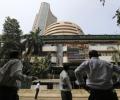
'2018 has seen a bi-polar market.' 'Thanks to gains in some key stocks, market returns are positive. But there has been huge wealth destruction in the small and mid-cap space.'

Wanindu Hasaranga, who grabbed four prized wickets, was the pick of the bowlers for Rajasthan Royals.

Here's how to own your dream home without paying excessive interest on your EMIs.

Small stocks made a dashing comeback in 2020 after delivering negative returns in the last two years as increased retail investor participation in pandemic times saw small-cap index surging up to 31 per cent and outperforming the bigger benchmark gauge. This year turned out to be eventful for the equity market, witnessing bearish and bullish sentiments at different points of time. While the initial part of COVID-ravaged 2020 saw the bears in full force amid concerns related to the pandemic and lockdowns hurting economic activities, bulls made a comeback towards the latter half of the year. As the market swayed with many lows as well as highs, small and mid-cap indices emerged as markets favourites in 2020.

There is polarisation among sectors with IT and healthcare receiving the lion's share of FPI money in the past two quarters.

Index funds and exchange-traded funds (ETFs) have added a record number of investment accounts in 2024, buoyed by the sectoral and thematic investing euphoria that has spilled into the passive space.

rediffGURU Ulhas Joshi answers your mutual fund queries.

Investors seem to be shying away from stocks of companies in the 'digital' space with most counters that comprise the Nifty India Digital index giving negative returns over the past year. The index tracks the performance of a portfolio of stocks that broadly represent the 'digital theme' within basic industries, such as software, e-commerce, IT-enabled services, industrial electronics, and telecom services. The fall in some of these stocks over the past year has been steep; the sharpest decline of around 60 per cent was seen in shares of PB Fintech (parent company of Policybazaar).

The combined market capitalisation of BSE-listed companies hit an all-time high of Rs 343.48 lakh crore on Monday, amid a rally in equities after the BJP registered victory in assembly polls in three Hindi heartland states. Following the sharp uptick in the market, investors became richer by over Rs 5.81 lakh crore on Monday. The 30-share BSE Sensex jumped 1,383.93 points, or 2.05 per cent, to close at a lifetime high of 68,865.12.

Neelesh Surana, who manages Mirae Asset Tax Saver and Mirae Asset Emerging Bluechip, remains constructive on Indian equities from a three to five-year time frame.

Among the Sensex constituents, as many as 16 stocks closed with losses with Nestle India, Kotak Mahindra Bank, IndusInd Bank, Bajaj Finserve, Titan and JSW Steel being the major laggards. Index major Reliance, Hindustan Unilever, Maruti and Tata Steel also declined due to selling pressure. In contrast, NTPC, TCS, Tech Mahindra, Bajaj Finance bucked the trend and ended the day in green. Axis Bank, Bharti Airtel, Mahindra & Mahindra and Tata Motors also defied the trend.

The Tata group companies are now more valuable than all the listed central public sector undertakings (CPSUs) or companies in the country. The key 20 listed Tata companies ended the 2021 calendar year with a combined market capitalisation of Rs 23.36 trillion, ahead of the 70 listed CPSUs, which had a combined m-cap of Rs 23.2 trillion. In comparison, these CPSUs had a combined market capitalisation of Rs 16.7 trillion at the end of December 2020 against the Tata group firms' combined m-cap of Rs 15.7 trillion.

Omkeshwar Singh, Head, Rank MF, a mutual fund investment platform, answers your queries.

The one-year returns for equity-oriented mutual fund (MFs) schemes have largely mirrored the gains made in the secondary market. However, schemes that invest in infrastructure (infra), small-cap, and public sector undertaking (PSU) banks have emerged standout performers, with gains in excess of 100 per cent in some cases. Of the total 484 equity schemes, 353 have managed to beat the Sensex, reveals the data provided by Value Research. Around 20 have delivered returns in excess of 90 per cent and six schemes have given returns of over 100 per cent in the past one year. The S&P BSE Sensex Total Return Index (TRI) has given returns of 51 per cent in the last one year, ended October 29.

Asset-weighted returns of large cap funds lagged their benchmark by 273 basis points, ELSS funds by 318 bps and mid- and small-cap funds by 230 bps.

IMAGES from the ICC Champions Trophy match played between Bangladesh and New Zealand in Rawalpindi on Monday.

Images from the IPL 2025 match between Rajasthan Royals and Kolkata Knight Riders.
The share of listed public sector undertakings (PSUs) in the overall market capitalisation has hit a three-year high of 11.4 per cent. This comes on the back of the sharp outperformance of the PSU pack over the past two years. In 2021 and 2022, the BSE PSU index gained 41 per cent and 23 per cent, respectively. Market participants said a combination of factors like value buying and bullishness, particularly in public sector banks (PSBs), were the reason for the improved prospects.
Retail investors now own a bigger slice of small-cap companies than a couple of years earlier, attributable to their growing conviction in mutual fund (MF) schemes focused on this space. Data from Capitaline shows MFs' average holding in the National Stock Exchange Nifty Smallcap 250 rising to 8.67 per cent, from 7.67 per cent in the past two financial years, with the number of companies with over 20 per cent MF holdings, rising from 15 to 24. At the end of May, the top five small-cap firms with the highest MF holdings were Carborundum Universal, Blue Star, Cyient, Gujarat State Petronet, and Cholamandalam Finance.
 © 2026 Rediff.com - Advertise with us - Disclaimer - Privacy Policy - Sitemap - Feedback - About us - Terms of use - Grievances